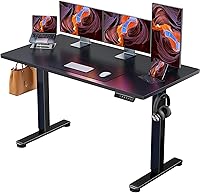
Why Are Standing Desks So Expensive?
Standing desks cost more than fixed desks because the height adjustment hardware costs more than the top. Electric frames add dual motors, a controller and thicker steel legs, and those parts often cost more than the wood or laminate surface they carry.
On this page (10 sections)
- Why are standing desks so expensive compared with fixed desks?
- What does the electric lift system actually add to the price?
- How much of the price is the tabletop?
- Why do manual crank desks cost less than electric ones?
- Do steel quality and weight capacity change the price?
- Why are some standing desks so much more expensive than others?
- Where can you save without losing the point of a standing desk?
- What accessories add to the total, and are they worth it?
- How do you decide whether the price is worth it?
- The short answer on standing desk prices
Standing desks cost more than fixed desks because the height adjustment hardware costs more than the top. An electric frame adds motors, a controller and thicker steel legs, and those parts often cost more than the laminate or wood surface they carry.
The desk surface itself is not the expensive part. Most of the price sits in the frame, and the frame is what lets the desk move.
That is the short answer to why are standing desks so expensive.
Why are standing desks so expensive compared with fixed desks?
The moving parts are the cost. A fixed desk is a top on four legs.
A standing desk adds a lift mechanism, a control switch, and legs that telescope inside each other.
That hardware needs tighter manufacturing than a plain leg. The columns must slide smoothly without wobble at full height, and the motors must lift the load evenly.
Steel tube inside steel tube means more material and more machining per leg.
The electronics add a second layer. An electric frame carries a controller, a power supply, and often a memory panel with saved heights.
Each of those parts has its own cost and its own failure point.
Then there is the safety and stability work. A desk that rises to standing height becomes top-heavy, so the feet and frame have to be sized to stop it tipping.
That extra bracing shows up in the weight of the frame.
What does the electric lift system actually add to the price?
The motors, controller and power supply are the biggest single cost in an electric desk. They are also the parts a manual desk leaves out entirely.
Take the VIVO 3-Stage Dual Motor Desk Frame. It uses hidden-drive internal dual motors with a 1.5 inch per second lift speed, and its three-piece telescopic legs raise the frame from 23.5 to 49.3 inches.
The memory controller stores 3 preset heights.
Every one of those features costs money to build. Dual motors mean two lift units instead of one, and a memory controller means a circuit board and buttons.
The 220 lb capacity comes from all-steel construction and a three-part column support system.
A basic two-stage single-motor frame with a simple up and down switch skips some of this. That is why the cheapest electric desks sit well below the premium ones.
How much of the price is the tabletop?
The top is usually the smaller share of a standing desk's cost. Laminate and particle board surfaces are cheap to make.
The frame beneath them is not.
This is why frame-only models are the best value for some buyers. The VIVO frame supports tops from 40 to 85 inches long and 23 to 43 inches wide, at a thickness of 3/4 inch and greater.
You buy the base and supply your own surface.
A spare tabletop, a piece of butcher block or an inexpensive board can cut the total. The catch is that you have to match the top to the frame's length, width and thickness range.
Pre-built desks bundle a top with the frame for convenience. You pay for someone else to pair the two and ship them together.
Why do manual crank desks cost less than electric ones?
A hand crank removes the motors, the controller and the power supply. What is left is steel legs and a winding mechanism, so the price drops.
The VIVO 60 x 24 Manual Crank Desk is a full desk, not just a frame. It pairs a one-piece 59 x 23.6 inch top with an all-steel frame that supports up to 110 lbs.
The crank moves it from 28.6 to 46.8 inches.
The trade-off is real. You turn a handle instead of pressing a button, and the weight limit is lower than a dual-motor frame.
You also give up memory presets, since there is nothing to store a height in.
For a home office where one person sets the desk and leaves it, a crank is a sensible way to save. For a shared desk that changes height several times a day, the electric version earns its price.
Do steel quality and weight capacity change the price?
Yes. Heavier steel and higher weight ratings cost more to build.
A frame rated for 220 lbs needs thicker columns and stronger joints than one rated for 110 lbs.
The weight also matters for shipping. A sturdier frame weighs more, and freight costs follow.
That is part of why two desks with similar features can differ in price.
Capacity is not just a number on a box. It tells you how much monitor, laptop and desk clutter the frame can carry at full standing height without strain.
Our guide to how much does a standing desk weigh covers the weight side for both the desk and what it holds.
Leveling feet are another small cost that shows up in better frames. They let the desk sit flat on uneven floors, which matters more as the desk gets taller.
Why are some standing desks so much more expensive than others?
The lift system and the leg design separate the price tiers. Three-stage legs cost more than two-stage legs, and dual motors cost more than a single motor.
Three-stage legs telescope in three sections instead of two, so they reach higher and sit lower when collapsed. The extra section means more steel and more machining per leg.
Memory controllers, faster lift speeds and higher weight limits push the price up further. A desk that rises at 1.5 inches per second with 3 saved heights costs more than one with a basic switch.
Premium desks also spend on stability at full height. Wider feet, crossbars and heavier frames all add cost, and they are the parts you notice when the desk is at standing height.
Where can you save without losing the point of a standing desk?
Buy the frame and use your own top, or choose a manual crank. Both routes keep the height adjustment and cut the parts that cost the most.
A frame-only electric base is the middle path. You still get motors and presets, but you skip the bundled top and the markup that comes with a complete desk.
Check the frame's supported top size before you order, and measure the space you have.
A manual crank desk is the cheapest complete option. It is a full desk with a top, and the only thing you give up is electric movement.
For a single user who sets a height and stays there, that is a small loss.
A basic two-stage electric frame is the third route. It skips the third leg section and some of the controller features.
You get powered height adjustment at a lower cost, with a lower top height and often a lower weight rating.
What accessories add to the total, and are they worth it?
Cable management is the accessory most worth budgeting for. A standing desk moves up and down, so loose cables get pulled, and a tidy setup protects both the cords and the desk.
The Litwaro No-Drill Cable Tray clamps to the desk edge and holds about 15 lbs. It fits desk thickness from 0.4 to 2.4 inches, and its rubber pads protect the surface from scratches.
The two side holes let cables pass through.
It mounts without drilling, so you don't put holes in a new top. The tray suits inward or outward installation depending on where your cables run.
Skip it if your desk already has a built-in cable channel. It is also not needed if you keep a laptop-only setup with one cable.
Other accessories, like monitor arms and keyboard trays, are optional. Each one adds cost, so buy them only if they solve a problem you actually have.
How do you decide whether the price is worth it?
Work out the cost per year of use, not just the sticker. A desk you use five days a week for years spreads its price thin.
A cheap desk that wobbles or fails early does not.
Start with your height range. Check the frame's lift range against your seated and standing heights, using our guide to what height should a standing desk be.
A desk that cannot reach your standing height is not a saving at any price.
Then match the frame to your load. Add up your monitor, laptop, and anything else that lives on the desk.
A 110 lb desk is fine for light setups; a heavier dual-motor frame suits multiple monitors.
Finally, decide how often the height will change. One user who sets a height once can live with a crank.
A shared desk or a user who switches all day gets more value from memory presets.
If a motor or controller stops working later, our guide to how to fix a standing desk covers the common checks before you replace the frame. For the full buying picture, see our standing desk for home office guide.
The short answer on standing desk prices
Standing desks are expensive because you are buying a lift mechanism, not just a desk. Motors, controllers, telescoping steel legs and the stability work that goes with them cost more than the top they carry.
That is why the price varies so much between models. The cheapest way in is a manual crank or a frame-only electric base with your own top.
The most expensive desks spend on dual motors, three-stage legs, memory presets and heavier steel.
Pick a manual crank if one person sets the height and leaves it. Pick a frame-only electric base if you already have a top and want presets.
Pick a full electric desk if the desk is shared or changes height every day. In every case, check the lift range against your own heights before you pay for features you won't use.
Frequently asked questions
Do standing desks cost more than a normal desk of the same size?
Yes. A fixed desk is mostly a top and four legs, while a standing desk adds a moving frame with motors or a crank, plus a controller.
That hardware is the extra cost, and it grows with lift speed, weight capacity and the number of height presets.
Are cheap standing desks worth buying?
They can be, if you accept a smaller top or a manual crank. A hand-crank desk skips the motors and controller entirely, so the money goes into steel and a surface instead.
Check the lift range against your own seated and standing heights before you buy.
Does a standing desk use a lot of electricity?
No. The motors only run while the desk is moving, a few seconds at a time.
The draw is small and brief, so a typical electric frame won't show up as a noticeable change on a power bill.
The bigger cost is the frame itself, not the electricity.
Can I save money by putting my own tabletop on a standing desk frame?
Yes. Frame-only models are the cheapest way into electric height adjustment.
You supply the top, so a spare tabletop or an inexpensive board can cut the total.
Check the frame's supported length, width and thickness before you buy a top.